Showing posts with label classes. Show all posts

Friday, February 17, 2017

Spring Foraging Classes

I've partnered once again with both Bainbridge Island Parks & Rec and The Field Trip Society in Seattle to offer a variety of spring foraging trips, from short wild edible ID walks in a Seattle park to all-day shellfish extravaganzas.

Below are the classes and dates (plus one special dinner). Check back for additional classes.

Spring Foraged Dinner, March 19, La Medusa, Seattle

Wild Edible Hike, March 24, Issaquah, WA

Shellfish Foraging & Cooking, March 30, Dosewallips State Park, WA

Wild Edible Hike, April 20, Issaquah, WA

Shellfish Foraging & Cooking, April 28, Dosewallips State Park, WA

After-Work Wild Edible Walk, May 2, Seattle, WA

Shellfish Foraging & Cooking, May 13, Dosewallips State Park, WA

Wild Edible Hike, May 18, Issaquah, WA  *NEW*

Monday, September 26, 2016

The Field Trip Society

New class announced for October 27!

The Field Trip Society is a new Seattle-based business offering a wide range of hands-on experiences for the adventurous learner,  from outdoor excursions to cooking classes. I've partnered with FTS to teach foraging and wild foods workshops.

Here's my fall lineup:

October 6: Wild Edibles of the Cascade Foothills. We'll take three-mile hike through forest, not far from Seattle, discovering nature's bounty along the way. We'll see dozens of plants and fungi, learn about their identification and natural histories, and discuss culinary uses. This in-depth exploration is perfect for the nature lover and adventurous eater.

October 24: Foraged Dinner at La Medusa, Seattle. In this intimate and educational dinner, I'll discuss autumn's most prolific Northwest fungi: where they grow, how to handle and care for them, and delicious and simple methods to prepare them for harvest dinners. Guests will have the opportunity to wander into the kitchen to see the chefs at work, as well as dine on a five-course meal complete with wine pairings at one of Columbia City's most beloved restaurants, La Medusa. Price includes 5-course meal, wine pairings, and gratuity.

Friday, April 29, 2016

Shellfish Foraging & Cooking Class

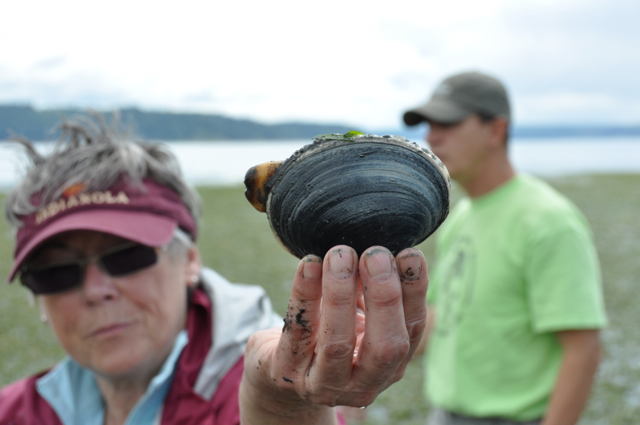
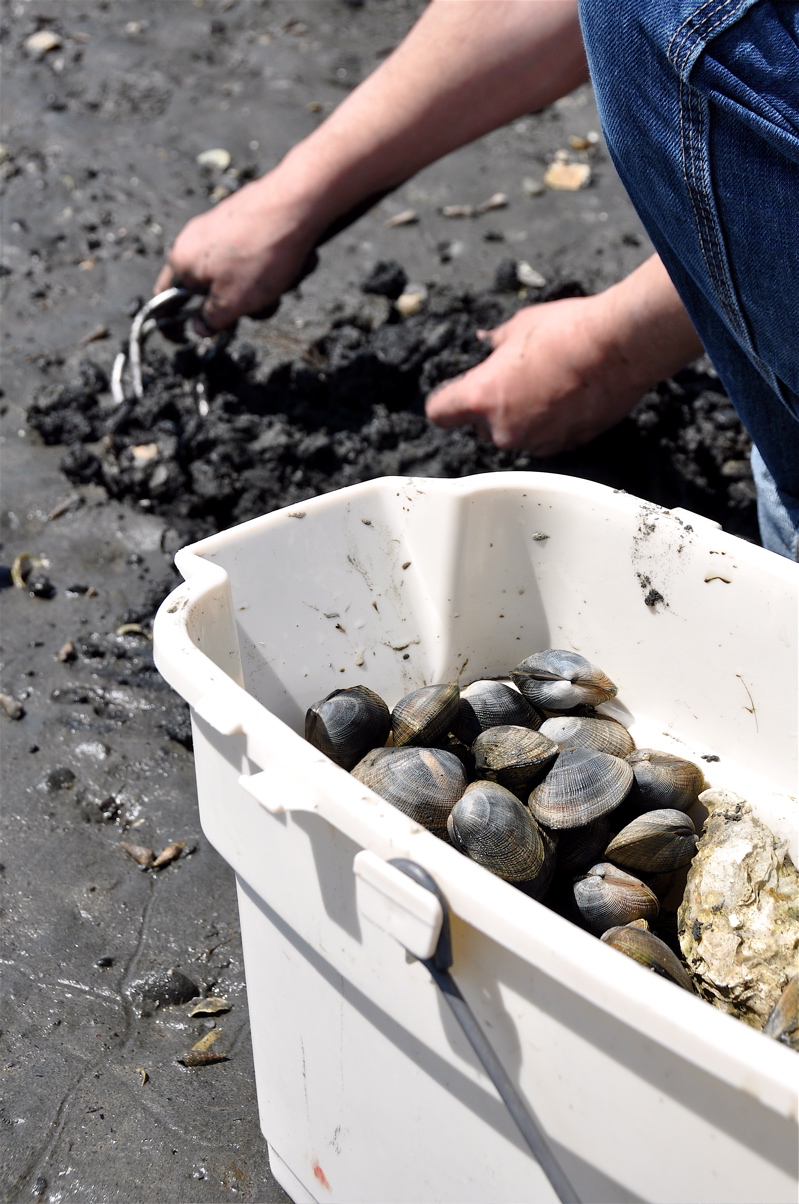
PULL ON YOUR rubber boots and grab a bucket! There's still time to learn how to forage and cook Puget Sound shellfish. A new class has been added to this spring's roster after the other two classes sold out immediately. Currently there are eight four open spots.

We'll learn how to dig for clams, shuck oysters, and cook our catch. The class meets at Hood Canal's beautiful Dosewallips State Park on May 6 at 10:30am. Weather report is for sunny, mid-70s, but just in case we have a large covered shelter at the park for the cooking segment.

Cost is $85/person for a five-hour class and you'll go home with a cooler full of clams and oysters. Sign up through Bainbridge Island Parks & Rec by calling 206-842-2306 x118.


Wednesday, February 17, 2016

Fall Classes & Lectures

Once again I'm partnering with The Field Trip Society to offer an introductory wild food and foraging class. Check back for additional classes and lectures.

Classes


Talks & Lectures

Tuesday, March 17, 2015

Wild Greens Workshop

It's that time again for those of us on the West Coast. The woods and meadows are waking up. Wild greens—tasty, nutritious, free—decorate the woods and forest fringes.

To ring in the spring harvest, I'll be teaching a foraging and cooking workshop at Heyday Farm on Bainbridge Island on March 27, with a focus on wild spring greens, especially stinging nettles. As I've said here before, nettles are the backbone of my spring foraging. I use nettles in soups, pastas, and sauces, and I put up large quantities of nettle pesto to have on hand year-round.

At Heyday, we'll spend the morning foraging in the woods around the farm, learning about and harvesting what’s in season. Back at the historic Heyday Farm kitchen and farmhouse, we'll learn several ways to pair and prepare our catch. The class will include a satisfying lunch. Cost is $110. Please sign up through Bainbridge Island Parks and Recreation, or by calling (206) 842-2306.


Monday, January 6, 2014

New Classes Announced

Happy new year everyone, and may it be a year filled with wild foods and outdoor adventure. As I write in my January column for Seattle Magazine, this is the year to get outside and turn over rocks like a kid again.

To help with such resolutions, I've got new classes lined up for spring 2014.

  • Spring TBD: Razor Clamming Overnight – Washington Coast. Two days of razor clamming and cooking instruction plus lodging. Call to be added to waiting list. This class is offered through Bainbridge Island Parks & Rec, and dates will be determined by Washington Department of Fish & Wildlife official razor clam openings. See page 35 of brochure for more information. To register, call 206-842-2306 x-118.

  • March 23: Stinging Nettles Foraging/Cooking – Bainbridge Island, WA. This class is offered through Bainbridge Island Parks & Rec. See page 35 of brochure for more information. To register, call 206-842-2306 x-118.

  • March 30: Shellfish Foraging/Cooking – Dosewallips State Park, Brinnon, WA. This class is offered through Bainbridge Island Parks & Rec. See page 35 of brochure for more information. To register, call 206-842-2306 x-118.

  • May 3: Shellfish Foraging/Cooking – Dosewallips State Park, Brinnon, WA. This class is offered through Bainbridge Island Parks & Rec. See page 35 of brochure for more information. To register, call 206-842-2306 x-118.

  • Ongoing: Side Tour – Seward Park, Seattle. Classes for January 8, February 26, and March 1 are all sold out, but stay tuned for more classes in the future.

Sunday, March 4, 2012

Northern California Workshop

I'm honored to be part of Marin Organic's "Food for Thought" series this spring. Join me on March 31 in Bolinas for a foraging and cooking workshop that's sure to be a nourishing day for all. We'll spend a few hours outside identifying and gathering wild foods before returning to a nearby hearth to cook our catch and enjoy a local libation.

The workshop is 10 a.m. - 3 p.m. and costs $80 (including a copy of my book, Fat of the Land). Local forager Kevin Feinstein will be on hand as well to offer advice and sign copies of his new book, The Bay Area Forager. Accompany us for a fun day split between the field and kitchen, with a chance to learn handy skills, make new friends, and enjoy the regional bounty.

Thursday, January 12, 2012

New Classes Announced

I'm pleased to announce that I'll be returning again this year to Bainbridge Island Parks & Recreation to teach foraging classes. To see class descriptions, click here and scroll down to pages 35 -36 to "Bounty of the Land." You can also find updated class listings (plus readings, lectures, and so on)  posted in the right column of this blog near the top, under the heading "Upcoming Events & Classes."

Spring classes scheduled so far:

  • March 28, Stinging Nettles: We'll divide our time between the field and the kitchen, foraging tasty and nutritious stinging nettles and then preparing a delicious recipe.
  • April 7, Shellfish: Learn how to dig clams, shuck oysters, and cook a gourmet meal right on the beach.
  • May 7, Shellfish: Learn how to dig clams, shuck oysters, and cook a gourmet meal right on the beach.

Additionally, I'll be offering my wild edible nature walk again this spring, an easy 3-hour ramble in a state park near Seattle. Stay tuned for dates.

Friday, July 1, 2011

Forager's Double Header

***THIS EVENT IS SOLD OUT***

Clam Bake with Hank & Lang
Join author-foragers Hank Shaw and myself for a memorable day on the shellfish beds of Puget Sound. Bring a clam rake, not your pillow! We'll be digging limits of Manila clams and other bivalves to cook right on the beach.

Learn the finer points of shellfish habitat, identification, processing, and cuisine. You'll need a bucket, rubber boots, garden cultivator (either hand-held or long-handled is fine), shellfish license, and the beverage of your choice. Lunch will be a feast of clams, along with other goodies provided by the instructors. The cost is $75 and includes signed copies of each author's book, a $43 value by itself. Class meets Friday, July 29, at 10:30 a.m. in the South Sound, an hour and fifteen minutes from Seattle.

Space is limited. To sign up, please email me at finspotcook AT gmail dot com.


About the instructors:
A former line cook and political reporter, Hank Shaw runs the blog Hunter Angler Gardener Cook, twice nominated for a James Beard Award and winner of two awards for Best Blog by the International Association of Culinary Professionals. Hunt, Gather, Cook: Finding the Forgotten Feast is his first book.

Langdon Cook is author of the book and blog Fat of the Land: Adventures of a 21st Century Forager. He is a columnist for Seattle Magazine and a frequent speaker and lecturer on wild foods and the outdoors.

Thursday, June 23, 2011

Kiss My Geoduck

This spring's shellfish classes have been more fun than I could have imagined. Any day playing at the shore is a day well spent, but when you add in a mix of interesting folks and the promise of fresh seafood cooked on site, the bonhomie is nearly boundless.

Those of us who have been digging clams for years sometimes forget there's a learning curve to seafood foraging—from understanding the different habitats and species to knowing what tools to use. Even the processing and cooking of shellfish can be intimidating to a first-timer.

I should know. Despite having been a  regular digger of littlenecks, razors, cockles, and a variety of other bivalves, it was only in the last couple years that I started going after geoducks. Why the wait? I suppose it was a variety of things—their size, the fact that they're available only during the lowest tides of the year, the specialized cooking techniques, and so on. Geoducks are the big time.

When Jeff Ozimek at Bainbridge Island Parks & Rec (pictured below holding a 'duck and a small horse clam) proposed a geoduck class, I was admittedly skeptical. Even a seasoned geoducker doesn't always get his 'duck. Instead, we initiated the foraging curriculum with some introductory classes that tackled the basics, gathering limits of littlenecks and oysters and then cooking them up at a picnic shelter. But the interest in a geoduck class was high, so we took the plunge.

Despite a late start (the Hood Canal Bridge closed for nuclear submarine traffic) and a somewhat chaotic beginning, during which a few 'ducks escaped our furious digging efforts as an insurmountable tide flooded in, the class regrouped farther up the beach and managed to dig two geoducks. Everyone had the chance to reach deep into a hole to feel the rubbery neck of a geoduck and then contemplate what it would take to excavate around its shell and wrestle the thing out. Some of us got good and muddy, too.

The biggest letdown was tussling with a huge clam only to find out it was a horse and not a 'duck, a mistake that can usually be prevented by seeing (or feeling) the tip of the siphon before digging. (The geoduck's siphon tip is relatively smooth.) But with clam shows all around us and a posse of hungry diggers, it was catch as catch can—and no surprise we rode a few ponies.

Digging 'ducks (or any clams, for that matter) will give you an appetite. Back at the picnic shelter everyone pitched in to make sashimi and ceviche with the geoduck's raw neck meat and stir-fried body meat with snap peas, carrots, and onions. Most of the students had never tasted geoduck before. They were just as taken as I was upon first bite by its sweetness and satisfying crunch. The finish on a bite of geoduck sashimi is akin to another local delicacy, the Olympia oyster: that initial sweet clam flavor leads to a slightly coppery or metallic aftertaste that mingles nicely with a drink of white wine or a beer.

Two geoducks fed about a dozen people in all. Not a bad ratio of clam to digger.

Tuesday, May 17, 2011

School's Out...side

If there's one message I want to send via this blog and my book, it's this: Get outside.

The more time we spend in the outdoors reconnecting with the natural world, the healthier our minds and bodies will be and the more likely we'll become good stewards of the environment. That's my opinion, at least.

Last week I had a chance to put this simple idea to work with a dozen high school students. We spent the week mostly outside in a variety of landscapes, studying our local plants, animals, and fungi—and nourishing ourselves with the natural foods found all around us. 

On Day 1 we went to the beach. Most of the kids had never dug clams before. They found sand dollars and learned about invasive critters like the oyster drill. A few of them even sampled a raw oyster for the first time. Time passed quickly as they explored Puget Sound's nearshore habitat, watching fly fishermen cast for searun cutthroat, munching on a sea bean or two, and noting a patch of Japanese knotweed that had gotten a foothold above the tideline.

After digging limits of Manila clams we steamed our catch on camp stoves, to unanimous approval. There was a palpable sense of achievement: we're eating food we had gathered just moments earlier. It tasted fresh and satisfying.

Day 2 was spent in the Cascade foothills outside Seattle, where we hiked a few miles and identified dozens of edible plants along the way. We nibbled some and picked quantities of others for a Friday feast, including stinging nettles, fiddleheads, and miner's lettuce.

The urban foraging component on Day 3 was perhaps the most surprising part of the week, as we found all kinds of delicacies in a public park just a few blocks away from school. The students picked enough dandelions to make several loaves of bread and a platterful of Dandy Burgers. But that was merely the beginning. Right in the city we found fiddleheads, wild wood sorrel, maple blossoms, and even a patch of shaggy mane mushrooms in prime condition, inspiring two of the students to compose "Ode to a Shaggy Mane," the tragic tale of the mushroom's biological imperative to deliquesce.


Also on Day 3 we had lunch at Nettletown to see how a local restaurant incorporates wild foods into its menu (verdict: delicious) and then broke into smaller groups back in the school kitchen to make Dandy Bread and Muffins at the end of the day.


Day 4 was a jaunt to the sunny side of the mountains to look for morel mushrooms. Who doesn't love a treasure hunt? After I confirmed that a few of the cryptic caps were indeed poking out of the leaf litter, the students slowed down and started scanning the ground with intensity. Occasional hoots and hollers punctuated their discoveries. The excitement of the mushroom hunt was in the air. Our morel season has only just begun in the snowbound North Cascades but we found enough to saute up a panful with garlic and shallots and enjoy the distinctive earthy spring flavor of morels over sliced baguette.

For Day 5 the students gathered one last time to spend the day writing about their experiences before cooking a celebratory meal. I couldn't be there for the final feast, but no matter; at that point they had confidence in their abilities to plan and execute a wild food menu of their own devising. Susanne, their teacher, told me later that "the kids really impressed themselves and the people around campus. It was a gorgeous sunny day so we set up a table out on the grass and had a picnic."

What a perfect way to conclude a week in nature's class room.

Wednesday, May 11, 2011

Spicy Thai Basil Clams

Last week I shucked and jived with my first shellfish class. We couldn't have asked for a better day. The sun was out, as were bald eagles, plenty other clam diggers, and daytrippers shaking off what has been a tough spring of record rain and cold. A herd of elk even joined us on the beach to take in the sun. John Adams, manager of Taylor Shellfish's Dosewallips farm, was also on hand to share his extensive knowledge of shellfish habits and habitat.

And my words of wisdom to the assembled students, as reported by Seattle Weekly's new food critic, Hanna Raskin? Shellfish harvesting is "embarrassingly easy." Not that you should be embarrassed to take a class to learn how! Probably my choice of words could have been better.

The thing is, digging Manila clams is easy. They live just a few swipes of a hand rake beneath the surface of gravelly or muddy beaches throughout Puget Sound. After digging limits of clams and picking oysters, we walked back to a picnic shelter at Dosewallips State Park to cook our catch. If clamming is embarrassingly easy, preparing a gourmet meal in the outdoors is eye-poppingly simple.

First, to accompany an oyster shucking demo, we whipped together a Tom Douglas mignonette with champagne vinegar, diced shallot, lemon zest, and black pepper. I keep baby jars on hand for just this purpose. The mignonette was met with unanimous approval—it's no secret that a touch of acidity can bolster the joys of oyster eating.

Next we fired up the camp-stoves to make two different batches of steamed clams, one with Italian sausage and tomato, the other with a white wine and herbed butter sauce. I put the students to work. They diced onions, minced garlic, browned sausage, chopped herbs, and so on. The beauty of steamed clams is that a little prep leads to a meal that tastes like hours of kitchen slaving. The clams' liquor is the magic ingredient, combining with the other elements to create an alchemy of flavors that demands good crusty bread for full sopping effect. Empty beer boxes soon filled up with shells, a modern day midden.

Meanwhile John put the charcoal grill to work. He had a bag of key limes on hand for just this moment. I can now say that BBQ oysters with a squeeze of key lime is my new favorite way to eat the briny bivalves. I'll probably always like raw oysters the most, but it had been a while since I'd last barbecued them—and with a squirt of hot sauce rather than lime. John's method was an improvement. Oysters plump up nicely on the grill and the flavor is more rich than raw on the halfshell. The key lime was a perfect accompaniment. John said his father—also a shellfish farmer—believed that oysters with barnacles on the shell were superior to those without. I had to agree.

The next night I prepared the rest of my clam limit at home, using this basic but flavorful Thai preparation.

Spicy Thai Basil Clams

3 lbs Manila clams
1 tbsp peanut oil
6 cloves garlic, diced
1 thumb ginger, diced
8 Thai bird chilies, halved & de-seeded
2 tbsp Chinese rice wine
2 tsp sugar
1 tbsp fish sauce
1 tbsp chili bean sauce
1 1/2 cup basil, chopped

1. Scrub and rinse clams.

2. Combine rice wine, sugar, fish sauce, and chili bean sauce into small bowl.

3. Heat oil in wok. Stir-fry garlic, ginger, and chili peppers for a minute or two over medium heat, then stir in sauce, raise heat to high, and add clams. Cover and cook until clams open, several  minutes.

4. When clams have opened, remove from heat and stir in basil.

Serve immediately with steamed rice while singing Johnny Cash's "Ring of Fire" as fair warning to your guests.