At Heyday, we'll spend the morning foraging in the woods around the farm, learning about and harvesting what’s in season. Back at the historic Heyday Farm kitchen and farmhouse, we'll learn several ways to pair and prepare our catch. The class will include a satisfying lunch. Cost is $110. Please sign up through Bainbridge Island Parks and Recreation, or by calling (206) 842-2306.
Tuesday, March 17, 2015
Wild Greens Workshop
At Heyday, we'll spend the morning foraging in the woods around the farm, learning about and harvesting what’s in season. Back at the historic Heyday Farm kitchen and farmhouse, we'll learn several ways to pair and prepare our catch. The class will include a satisfying lunch. Cost is $110. Please sign up through Bainbridge Island Parks and Recreation, or by calling (206) 842-2306.
Monday, April 14, 2014
Halibut with Nettle Sauce, Peas & Miner's Lettuce
The miner's lettuce I used for this recipe is growing in a nice urban patch not far from my Seattle home. This is Claytonia perfoliata, not to be confused with the more common variety in Puget Sound, Siberian miner's lettuce, Claytonia sibirica. A few leaves scattered on the plate lend a sharp green note, while spring peas add texture. I like to use fresh shelling peas if possible, but frozen baby peas will do in a pinch. The sauce is quick and easy if you happen to have stinging nettle pesto on hand; I always have some frozen at the ready.
Stinging Nettle Sauce
2 cubes frozen stinging nettle pesto, defrosted
1 tbsp butter
2 tbsp diced shallot
1/2 cup heavy cream
1. Saute shallot in butter in a small sauce pan over medium heat.
2. Stir in stinging nettle pesto.
3. Lower heat and whisk in cream. Thicken to desired consistency, adding more cream if necessary.
For the final dish, ladle stinging nettle sauce and cooked peas into a shallow bowl. Plate pan-fried halibut fillet (see my friend Hank Shaw's tutorial for pan-searing fish) over sauce and garnish with miner's lettuce leaves. This recipe will make enough sauce for 2.
If you've put up quantities of stinging nettles and have some nettle pesto in the freezer, this is a fast restaurant-style meal. The pesto is also ideal for serving kids a quick and healthy pasta too.
Friday, April 26, 2013
Wild Bibimbap
The translation is "mixed rice"—it's basically rice covered with dollops of prepared dishes, or namul, which are then mixed together at table. The rice is heaped into a large bowl (all the better if it's a heated stone bowl, or dolsot, unlike the cheap plastic bowl pictured), and then a variety of meats and vegetables are arranged in a colorful and artfully balanced manner over the rice. The piece de resistance is a fried egg on top. A vinegared gochujang sauce ties it all together.
Here's the thing: bibimbap is traditionally served with at least one wild ingredient, gosari, also known as bracken fern (and sometimes called fernbrake on imported packages of dried bracken). This time of year the young fern shoots can be eaten fresh. Click here for instructions on foraging and preparing bracken (plus a health advisory). For bibimbap I like to cut the parboiled bracken into 3-inch sections and stir-fry with a little sesame oil, garlic, soy, and Chinese cooking wine.
Bibimbap is simple fare, but it requires alacrity in the kitchen—and with so many different ingredients, my advice is to make this dish for four or more people. Do all the prep work first (i.e., the chopping), then stir-fry each of the namul toppings in quick succession. Mound onto a large serving plate and keep covered. Other common toppings include: julienned and stir-fried zucchini; julienned carrots, which can be served raw or quickly stir-fried; bean sprouts, which should be boiled for a couple minutes until tender and then drained and tossed with a splash of sesame oil; and thinly sliced steak, bulgogi, marinated beforehand with a little sesame oil, garlic, soy sauce, and sugar before stir-frying.
Once all this busy work is complete, use your innate artistic skills to make an eye-catching presentation, kick back in a cozy place with friends and some cold beers, and dig in.
Friday, March 15, 2013
The Urban Naturalist
Tuesday, January 1, 2013
Nettle-Miso Halibut with Squash Purée
In the meantime, this dish is emblematic of kitchen resolutions I'll be trying to keep in the new year, namely an effort to think more about flavors and how they work together regardless of tradition or the proliferation of online recipe homogeneity. Improvisation: we'll be shooting for more of that in the coming year.
On that note, here's something I pulled together with a bunch of leftovers, a nice piece of fish, and a jar of dried stinging nettles that's been mocking me from its cobwebby corner of late.
Halibut with Nettle-Miso Glaze
24 oz halibut fillet, cut into 4 portions
1/4 cup white miso
1/4 cup aji-mirin
1/4 cup sugar
2 - 3 tbsp dried stinging nettle
1. Pre-heat oven to broil.
2. Combine miso, aji-mirin, and sugar in a small saucepan over medium-low heat and whisk together into a glaze. Add dried stinging nettle to taste.
3. Cover baking pan with a sheet of tin foil. Grease foil with cooking oil. Place halibut fillets on greased foil and brush with nettle-miso gaze. Broil for several minutes, depending on thickness of fillets, until glaze is bubbling and starting to brown. Fish should be tender, opaque, and easily flaked.
4. Plate glazed halibut over squash puree.
Squash Purée
2 large delicata squash
1 tbsp peanut oil
1 thumb ginger, peeled & diced
2 tbsp diced fennel bulb
1/4 cup sake
chicken stock
salt and white pepper, to taste
1. Cut squash in half and spoon out seeds. Rub with oil, season, and bake in 400-degree oven until soft, 30 - 45 minutes depending on size of squash. Scoop out squash and set aside.
2. Heat oil in a medium saucepan and sauté ginger and fennel for a minute or two. Add squash, mashing together. Pour in sake and allow to bubble off, stirring.
3. When sake has mostly cooked off, add chicken stock a little at a time and mix with immersion blender until consistency is fairly smooth. Season with salt and white pepper.
Serves 4.
The miso glaze is nearly representative of what I mentioned above as the proliferation of online recipe homogeneity. I'm sure you know what I mean. There's so much sameness on the web, a result of food bloggers copying each other. Mediocre recipes can now be found, nearly word for word, in such abundance that they might seem like classics. This glaze is actually pretty good (and simple!), but it's certainly not original in most aspects. I tweaked it with some stinging nettle to add an earthy dimension. The squash recipe was a complete improvisation and complemented the fish.
Here's to more improvisation in 2013!
Thursday, April 5, 2012
Bay Area Bounty
More than 20 years ago, when I lived briefly in Berkeley and San Francisco, I heard stories about Bolinas. Tucked away on a thumb of land south of Pt. Reyes and between the Pacific Ocean and Bolinas Lagoon, the community shunned conventional ways. The funny-looking locals farmed funny-looking crops in funny ways. Heck, maybe they even foraged (gasp!). This led to busloads of tourists wanting pictures of the native wildlife. Whenever the county erected a sign tipping off lookey-loos to their whereabouts, the locals tore it down. There's still no sign today, but the tenets of organic farming that began largely in this valley are now practiced all over the country; local artisan food makers are celebrated across the land for their award-winning breads, brews, cheeses, meats, and preserves; and foraging is just another common sense way to gather fresh, healthy food.
This past weekend, thanks to organizer Marin Organic, I joined with a few dozen food and outdoor lovers from all over the Bay to wander among the stunning beauty and bounty of Bolinas. [Listen to a radio story about the event here.] Kevin Feinstein, co-author of The Bay Area Forager, was on hand to share his local wisdom, and we were fortunate to have a few practicing chefs (plus eager students) to help with the afternoon feast. The weather looked ominous. Driving over Mount Tam, my rental car shook violently in the wind. Rain blowing in off the Pacific slashed sideways at my windshield. But by the time we poked our heads out from under the eaves of the Gospel Flat Farm stand, the rain had subsided and the sun was working hard to shoehorn clouds out the way.
![]() |
| Andrea Blum Photo |
Robust patches of miner's lettuce forced us to choose our steps carefully lest we trample a good food source. The stinging nettles were tall, nearly too tall for harvest, so we snipped the tops of the youngest, tenderest plants. Chickweed flourished among the miner's lettuce. Huge thickets of thimbleberry, already budding out, towered above us on the hillside, and red elderberry in flower hung overhead. It was an orgy of wild foods. Kevin pulled a few thistles from the damp soil and demonstrated how to peel the lower stalk and boil the root (note to self: I really need to do a dedicated thistle post one of these days).
![]() |
| Andrea Blum Photo |
![]() |
| Andrea Blum Photo |
Nothing beats tromping around in the woods in search of strange and often maligned plants and then transforming them into culinary marvels amidst a hubbub of wine and cheerful conversation. Coming together to nourish our minds and bodies was the order of the day. These are the basic underlying principles of community.
![]() |
| Photo Andrea Blum |
I've been supremely disappointed in our U.S. Supreme Court in recent years as it seems to thumb its judicial nose at the very concept of community in America, as if liberty can only be defined as the individual giving the finger to everyone else. Clearly, since our institutions are failing us, it's up to us, the people, to create community—and to hold onto it dearly.
Friday, March 9, 2012
Nettle Green Curry
The result was a green curry with an earthier, woodsier flavor. You can adjust this earthiness to your own palate by playing with the proportions of nettles, basil, and cilantro. The paste is incredibly easy to make, and it tastes so much fresher, brighter, and greener than a store-bought paste. All you need is a food processor or blender (or a mortar and pestle if you have the time and stamina).
Nettle Green Curry Paste
1 cup stinging nettles, boiled, drained & chopped
1/2 cup basil, chopped
1/2 cup cilantro, chopped
1 stalk lemongrass, chopped
1 kaffir lime leaf, chopped
1 shallot, peeled
4 large cloves garlic
1 large thumb ginger, peeled and sliced
1 jalapeño pepper, sliced
1/2 tsp ground coriander
1/2 tsp ground cumin
1/2 tsp ground white pepper
2 tsp brown sugar
1/2 tsp shrimp paste (or salt)
2 - 3 tbsp lime juice
3 - 4 tbsp fish sauce
6 tbsp coconut milk
Add more coconut milk to the paste in the food processor if it's too dry. For the finished curry I used a small saucepan to cook a few heaping spoonfuls of the paste in a tablespoon of peanut oil for a minute to unleash the flavors, then slowly stirred in less than a cup of coconut milk until desired consistency and added a few more splashes of fish sauce and a sprinkling of brown sugar. Meanwhile I broiled a fillet of local sablefish for 10 minutes, which got plated on a bed of rice. The curry was deliberately thick so that it could be dolloped on the broiled fish with a garnish of thinly sliced red bell pepper, green onion, and cilantro on top. Crushed peanuts completed the dish. You can adjust the texture, spiciness, and sweetness of the curry to whatever you're cooking. The paste should keep for a week in the refrigerator, or longer if frozen.
Wednesday, February 15, 2012
Stinging Nettle Gnudi with Sage Butter & White Truffles
Figuring the dastardly yet oh-so-tasty greens were bound to be up by now, I went for a walk this past weekend in a Seattle green space with my son to check on signs of life. Spring premonitions were everywhere: Indian plum leafing out, towhees trilling their cat-like songs, street corner sandwich boards advertising little league tryouts. Sure enough, stinging nettles—always one of the first splashes of chlorophyl on an otherwise drab, mid-winter floor—peeked out from the leaf litter like groundhogs nosing out of burrows on shadow patrol, some of them just barely tall enough for harvest.
Riley demonstrated one of his favorite skills learned at Wilderness Camp: he carefully picked a nettle leaf with his bare hand by pinching its hairless top and folded it over several times into a little package which he then popped into his mouth and ate. Look Dad, no sting! We went to a regular spot and harvested a grocery bag worth of tender young nettle tops.
This time Riley wasn't so lucky. He got stung on his calf, his youthful skin immediately turning red with little raised welts. Nearby he found a frond of licorice fern with visible spores underneath and rubbed it vigorously on the affected area. This noted folk remedy has never worked for me personally, but Riley insisted that the fern did the trick. I took a look and was surprised to see that the redness and welts were really gone. Next time we might harvest that licorice fern for food, too.
Nettle Gnocchi has been a go-to recipe in recent years, but until the other day I had never made...
Nettle Gnudi
Yep, naked—as in naked ravioli. Gnudi are basically ravioli fillings without their pasta clothing. You mix a bit of flour into the cheese filling and shape it into little balls or pillows. You can serve them boiled, but I like adding one more step and pan-frying the gnudi so that the rich, creamy inside is contrasted by the fried exterior. Finely chopped nettles (or spinach or herbs) add an extra dimension of flavor. It's up to you how much herbage to add. I didn't want my gnudi to be overpowered by the nettles, so I limited mine to a scant, loose cup; you could double that amount and end up with much greener, woodsier gnudi.
2 cups ricotta
3/4 cup grated parmesan
2 eggs
1 cup boiled and chopped nettles
1/2 cup flour, plus more for rolling
1/8 tsp nutmeg
salt and pepper
olive oil
butter
fresh sage, chopped
1. Blanche stinging nettles in boiling water for a minute. Drain, shock with cold water, and squeeze out as much excess water as possible. Chop finely to fill a loose cup.
2. Drain ricotta and stir into large bowl with parmesan, eggs, chopped nettles, a dash of nutmeg, and seasoning. Slowly add flour. Mixture should be damp and tacky without sticking to hands. If a half cup of flour doesn't do the trick, keep adding a little more at a time until you can form a wet ball in your hand without it adhering.
3. Sprinkle work surface generously with flour. Take a snowball-sized handful of cheese mixture and roll in flour until thoroughly coated. Roll out into a snake with a half-inch to inch diameter depending on preference. Cut into pillows. Dredge the cut ends in flour and shape each pillow as desired. Set aside on floured plate.
4. Boil gnudi in batches in salted water. They're done when they float to the surface. Use a slotted spoon to remove from boiling water to a clean plate. Place cooked gnudi on wax paper on a cookie sheet. I like to boil a batch after each snowball's worth of filling is shaped. While that batch is boiling (it only takes a couple minutes), I move the previous boiled batch from plate to wax paper. Then I continue with another handful.
5. Pan fry gnudi in olive oil and butter with chopped sage leaves until nicely browned. Leftover boiled gnudi can be refrigerated.
Nettle Gnudi with Lamb Ragu, Carrot Puree & Sage Butter Crumbs
For a more involved dish I made a lamb shoulder ragu by browning diced lamb shoulder in olive oil with shallot, deglazing with a splash of white wine, and stirring in a teaspoon of tomato paste. This got served over the pan-fried gnudi along with a sauce of pureed stewed carrots and a sprinkling of sage butter crumbs.
Gnudi are easier to make than potato gnocchi, and the melt-in-your-mouth inside is a truly wonderful thing. Another reason to get yer weed on.
Tuesday, June 28, 2011
Earthly Combo: Stinging Nettles & Morels
We first tried the pairing as a crostini. Marty surprised me with it one evening while I was busy making a Pinot Noir reduction. She lightly toasted sliced baguette, spread on ricotta followed by the nettle pesto, and finished the crostini with sauteed morels. We knew she was onto something with the first bite. It sounds so simple, yes, and you can almost imagine the flavors if you've eaten these foods before. But the pairing is more than the sum of its parts.
The next try was a pizza with the pesto and morels, plus mozzarella, cherry tomatoes, and a sprinkling of garden greens. While Marty is known for making some mean pizza, this was off the hook.
Most of you will have to wait until next year to give it a shot. Stinging nettles are flowering across much of their range and morels are dust nearly everywhere except the higher elevations of the Northwest. I'm hoping I might get one more chance when I venture into the mountains in late June.
Tuesday, March 22, 2011
Italian Nettle Sausage Pie
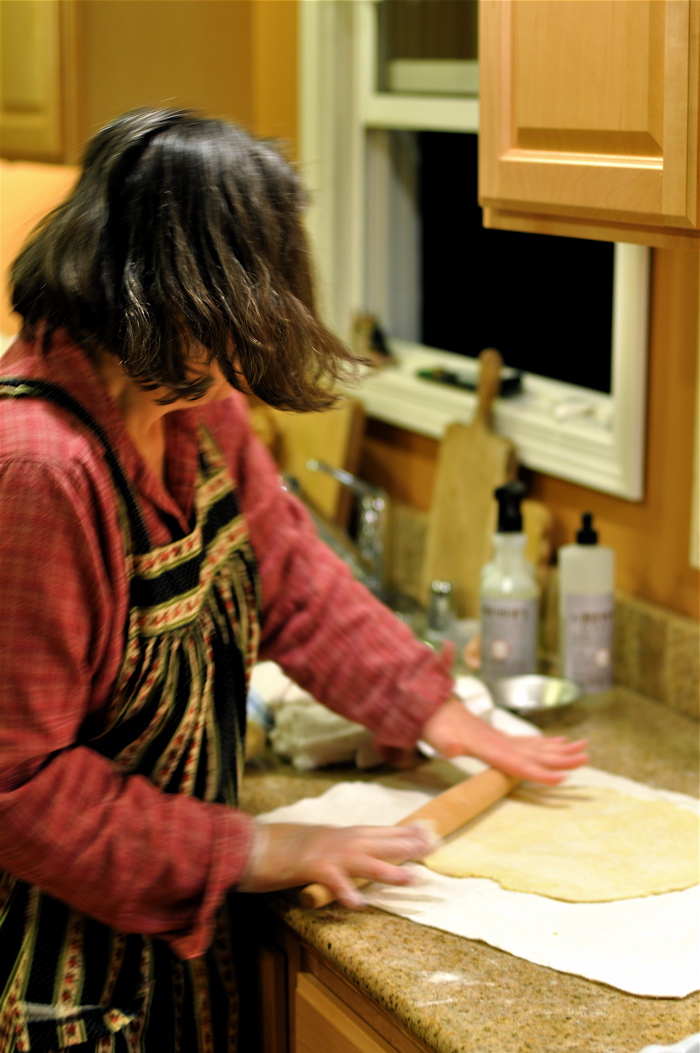
The evening began with a trip out to the chicken coop, where Kate nabbed fresh eggs. Next she unwrapped a tan disc and slapped it on the counter: the dough, just liberated from cold storage. At that moment it could have been dropped at center ice by a man in black and white pinstripes. "Rule number one," she said. "The only rule. Chill out." She handed me a mixing bowl. This, too, was zamboni cold.
Of course, like much of what she says, Kate's admonition to chill has multiple meanings. As I started to roll out my hockey puck of dough she stopped me. I was thinking too much. "I'll change the music," she offered. You need the right music to roll by. The smooth vibes of Seal soared out of Kate's kitchen speakers; I remembered how an old three-pinner friend of mine swore by this record for a fresh foot of powder in the back-country.
Kate's own style of rolling is more along the lines of the whirling dervish variety. She dances to the music, swings her hair to and fro, and belts out an Aretha Franklin chorus during the next song.
This all helps to explain why she calls her business Art of the Pie—as opposed to, say, Science of the Pie. More dionysian than apollonian, Kate's vision is for a world filled with pies, in which pie is merely the starting point for better things to come. "It's a movement," she laughs. Her own part in the movement can be measured by the 50 pounds of leaf lard she goes through each month, the 75 pounds of weekly apples in season, and the hundreds of students who have graduated from her four-hour class with a determination to spread the gospel of pie.
As for me, the proof was, indeed, in the pie, with a crust of flakey perfection and a savory filling that highlighted the brightness of wild weeds. Really, I can't recommend this recipe enough. It's a version of a classic, using stinging nettles instead of spinach, to superior effect. Our tweaks included the addition of leeks, nutmeg, red pepper flakes, and lemon juice.
I learned a lot during this pie-making session, and though I won't go so far as to say my new skills are ready for prime time, Kate has put me on the path to a fresh understanding of baking with her pie-making mojo.
1 pound sweet Italian sausage
4 large cloves garlic, chopped
3 leeks, thinly sliced (discard green tops)
6 eggs
20 oz stinging nettles, blanched and squeezed dry
4 cups shredded mozzarella cheese
1 cup ricotta cheese
1 tsp teaspoon salt
1/4 teaspoon pepper
fresh nutmeg to taste
2 tsp lemon juice
1 10-inch pastry for a double crust pie
1 tablespoon water
1. In a skillet over medium heat, saute sausage, leek, and garlic.
2. Separate one egg and set the yolk aside. In a mixing bowl, beat the egg white and remaining eggs. Mix in nettles, mozzarella cheese, ricotta cheese, salt, pepper, nutmeg, red pepper flakes, lemon juice, and sausage mixture.
3. Line a deep 9 or 10-inch pie dish with bottom pastry (with a 9-inch dish you will likely have leftover filling). Add filling. Cover with top pastry. Trim, seal, and flute edges. Cut slits in top. Beat water and remaining egg yolk; brush over top.
4. Bake at 425 degrees for 20 minutes, then lower heat to 400 degrees for another 30 minutes or until crust is golden brown and filling is bubbly. Let stand for 10 minutes before cutting.
Sunday, March 6, 2011
Wild Indian: Stinging Nettle Paneer & Porcini Chana Masala
Sometimes a kitchen experiment yields better results than you ever imagined, and you feel like Gene Wilder in Young Frankenstein. Happily, my recent creation neither ran amok through the neighborhood nor incited a pitchfork mob—though it did get a wild applause from my dinner guests.
I'm talking about my Stinging Nettle Paneer. The dreaded stinging nettle, as most of us have known since childhood, is a monstrous weed. It's invasive and hard to eradicate, and woe to those who try to drive it from civilization, because the nasty barbs pack a painful wallop. On the other hand, with a little love and understanding, the nettle becomes an ideal food. It's one of the first greens of spring (late winter for many of us) and loaded with nutrients.
Most people I know who like Indian cuisine have a special place in their hearts for Saag Paneer, the creamy spinach curry with fried cheese. After all, spinach is good for us and even a decadent presentation feels somehow virtuous. Try this recipe with stinging nettles and you'll simultaneously welcome the weed and never feel quite the same about Saag Paneer again.
Substitute stinging nettles for spinach? Really? Believe me, you'll wonder whether this dish was originally invented with the belligerent weed in mind. The nettles leave the spinach in the dust. They're so bright in flavor, with a wild sweetness that goes perfectly with the Indian spices. My dinner guests were blown away and so was I. This dish goes to the top of the list of stinging nettle recipes.
Stinging Nettle Paneer
3/4 lb paneer, cut into cubes
1 large onion
3-4 cloves garlic
1 4-inch thumb of ginger, peeled
2 tbsp vegetable oil, plus extra for frying paneer
3-4 cardamom pods, crushed
1/2 tsp cumin seeds
1/4 tsp ground cinnamon
1/8 tsp ground cloves
1-2 plum tomatoes, diced
20 oz boiled nettles, drained
1/2 tsp turmeric
1 tsp ground cumin
1 tsp ground coriander
1 heaping tsp garam masala
1 tsp black pepper
1-2 tsp salt
1 cup, more or less, heavy cream or yogurt or a mix
cilantro for garnish
1. In a food processor, pulverize the onion, garlic, and ginger into paste.
2. Over medium heat, saute paste in oil for a few minutes in heavy-bottomed saucepan. Add cumin seeds, cardamom, cinnamon, cloves, and tomatoes, and cook for a minute or two, stirring occasionally.
3. Squeeze out excess water in boiled nettles. You'll have a clump about the size of a baseball. Chop up by hand or with a food processor; I like mine well chopped, but not overly pulverized.
4. Add nettles to pan, along with tumeric, cumin, coriander, garam masala, black pepper, and salt. Stir together well.
5. Meanwhile fry paneer cubes in a little oil until lightly browned, then add to nettle mixture just before serving.
6. Finish over low heat with heavy cream or yogurt to desired consistency. Garnish with fresh cilantro.
I've been working through my store of frozen wild mushrooms all winter. With spring porcini season around the corner, it seemed like a good time to use up the freezer supply and make room for a new batch. Mushrooms work well in any number of Indian curries; I especially like their addition to this Chana Masala, where they provide an added textural dimension, not to mention mushroomy flavor.
For this dish I turned to Michael Natkin's recipe over at Herbivoracious for the spice regime. Toasting your spices in oil is a traditional way to extract full flavor, but you want to be extra careful not to burn the spices. The toasted black mustard seeds, in particular, are a must.
Porcini Chana Masala
1/2 pound porcini mushrooms (or cremini), roughly chopped
1 can (14 oz) chickpeas, drained
1 medium onion
3-4 cloves garlic
1 4-inch thumb fresh ginger, peeled
2 tablespoons vegetable oil
2 teaspoons black mustard seeds
1 teaspoon fennel seeds
1 teaspoon cumin seeds
1 teaspoon coriander seeds
1 can (14 oz) diced tomatoes, drained
1 teaspoon ground turmeric
1/4 teaspoon ground cinnamon
1/8 tsp ground cloves
1/4 tsp cayenne pepper
1 tbsp lemon juice
1 tsp salt
1 tbsp brown sugar (optional)
1 cup (or more) water, stock, cream
cilantro for garnish
1. With a food processor make a paste with onion, garlic, and ginger.
2. Heat oil over medium heat in a large skillet. Add black mustard, fennel, cumin, and coriander seeds, and toast until mustard seeds start to pop (about 30 seconds or so). Note: do not overcook spices in oil or the curry will be bitter. Immediately add paste and tomatoes. Cook until liquid evaporates and mixture begins to brown.
3. In a separate pan, saute mushrooms in a little oil or butter until lightly browned. Add to skillet along with chickpeas. (I used previously sauteed and frozen porcini, and added directly after thawing.)
4. Add turmeric, cinnamon, cloves, cayenne pepper, lemon juice, salt, and a cup or so of water if necessary.
5. Cook uncovered over medium-low heat for 15 minutes. Adjust seasonings.
6. I finished my curry with a tablespoon of brown sugar and a half can (about a cup) of coconut milk, for a slightly sweeter curry. Garnish with fresh cilantro.
Cooking Indian at home can seem like a recipe for failure. All those spices! If you're new to Indian cuisine, the first step is to visit your local spice store. You'll want to have the basics: turmeric, cumin seeds, cardamom pods, ground coriander, garam masala, and so on. The amount of spices and seasonings will be overwhelming at first, but a little practice and before long you'll be making your own adjustments to once-obscure seeming spices in a given recipe based on personal preference.
Wednesday, February 24, 2010
Nettle Pesto Pops

I found a frozen packet of nettles from last year's harvest in the freezer the other day. With all the fresh nettles we've been eating lately this seemed like an opportune time to see how a year-old hunk of frozen nettles tasted in comparison. I'm happy to report my dinner companions up the street didn't blink. Not for a second did they wonder whether my potluck contribution of Cream of Stinging Nettle Soup wasn't made from nettles picked that day (and I didn't tell—shhhh). The day-glo green color and signature flavor would have fooled me too.
Score another point for free, nutritious food.
Speaking of frozen nettles, I wouldn't have been able to make a soup with fresh nettles anyway because all of my harvest has gone into pesto production. There's a reason for this. She's four going on fourteen, cute as a button when she's not terrorizing her parents or building elaborate homes for ponies and princesses out of the furniture, and she loves her daddy's nettle pesto.
I've already posted a recipe for Stinging Nettle Pesto, but here's more info/photos about putting up your pesto. Use a Ziploc with a corner cut off to fill each cavity of the tray, then put in the freezer for several hours. Once frozen the pesto cubes can be easily removed from the tray and stored in freezer bags, ready for use throughout the year.
Whenever Ruby wants her pesto fix, I simply grab a pesto pop from the freezer, heat it up in the microwave, and toss with a bowl of cooked pasta. A single cube is enough to coat a few servings of pasta.
If you want to make a large batch of nettle pesto just remember to harvest enough nettles. A grocery bag packed with freshly harvested stinging nettles yields about two ice trays of pesto plus a small tub.
Few meals are healthier or easier to make.
Tuesday, February 16, 2010
Winter Is the New Spring: Nettle Gnocchi

Inhofe and his ilk can bury their heads in the D.C. snow and deny climate change, but here in the Pacific Northwest we just experienced the warmest January on record. Not the warmest in 10 years, not the warmest in a generation—the warmest since scientists first started keeping track, going back to 1891 in the case of Seattle. This is just one of many indicators—from melting glaciers in the Cascades to the changing migration patterns of birds, butterflies, and fish—that a degree or two of rising mercury is remaking the planet in dramatic ways.
The results of our balmy mid-winter beach break have been painfully clear, so to speak. Stinging nettles in the lowlands are already at harvestable size, with some well over a foot tall. I harvested my first batch on February 8. That's two weeks earlier than my previous earliest date. In fact, this year I could have found tender young nettles of six inches or so at the end of January.
To re-phrase an old saw, if the world gives you stinging nettles, make Nettle Gnocchi.
Whenever I make a potato-based gnocchi (as opposed to semolina-based) I'm always skeptical until the little pillows are safely plated and intact. So much can seemingly go wrong (though it usually works out). I improvised on the same recipe as the one for Oxtail & Porcini Gnocchi, which is based on a recipe from 101 Cookbooks. But after making gnocchi a handful of times in the past year I can say that recipes for potato dumplings are more like guidelines. The important thing is to get a feel for the dough. I don't think I've ever used the same amount of flour twice, and this is especially true when adding a wet ingredient such as boiled nettles to the mix.
So think of the amounts below as estimates. The best thing to do is start with less than the full cup of flour and then keep adding. You may end up using well over a cup as I did.
2 large Yukon Gold potatoes, boiled and peeled
1 egg, lightly beaten
1 cup nettles, boiled and chopped
1 cup or more flour
salt to taste
1. Boil nettles for a minute or two to neutralize sting. Remove to cold water. Next wring out excess water. Chop nettles, measure out a cup and then whir in a food processor.
2. Cut potatoes in half and boil in salted nettle water until tender, thirty minutes or more. Remove from water one at a time and peel. Break down potatoes with a fork and allow to cool. Make sure to attack lumps but don't over-mash.
3. Mix nettles into potatoes by hand, a little at a time.
4. Sprinkle a handful of flour over your work space. Pull potato-nettle mixture into a mound on floured surface and make a volcano-like crater. Pour beaten egg into crater and sprinkle 3/4 of the flour over top. Start working the dough with metal spatulas or your hands, adding more flour and folding the dough into itself as you go. I find this step gets messy unless I make sure to use plenty of flour.
5. Split the dough into 5 or 6 balls. The dough is ready when you can easily roll out each ball into a long snake. Again, a work surface dusted generously with flour makes this easier. Now cut into pillows.
6. Add gnocchi to salted boiling water. (You can re-use your nettle-potato water.) When they float to the surface they're done. Remove with a slotted spoon.
I ate my Nettle Gnocchi with two different sauces. A simple red sauce with grated parm works quite nicely, the acidity of the tomatoes marrying well with the high green note of the nettles.
But even better, in my opinion, is—surprise!—a sweet, herbed cream sauce. I know, my love for the cream sauce seems to know no bounds. Just trust me. For this more decadent preparation, try briefly sauteing fresh chopped herbs from the garden (I used sage, thyme, rosemary, oregano, parsley, and chives) in butter, splashing with a little cognac that bubbles off (but not before leaving a pleasant sweetness), and finishing with heavy cream. Pour over the gnocchi and sprinkle with parmesan. As you can see from my picture below I was in a bit of a hurry to eat this meal. I used half-and-half, which separated somewhat from the butter. Still, it was an amazing lunch.


